
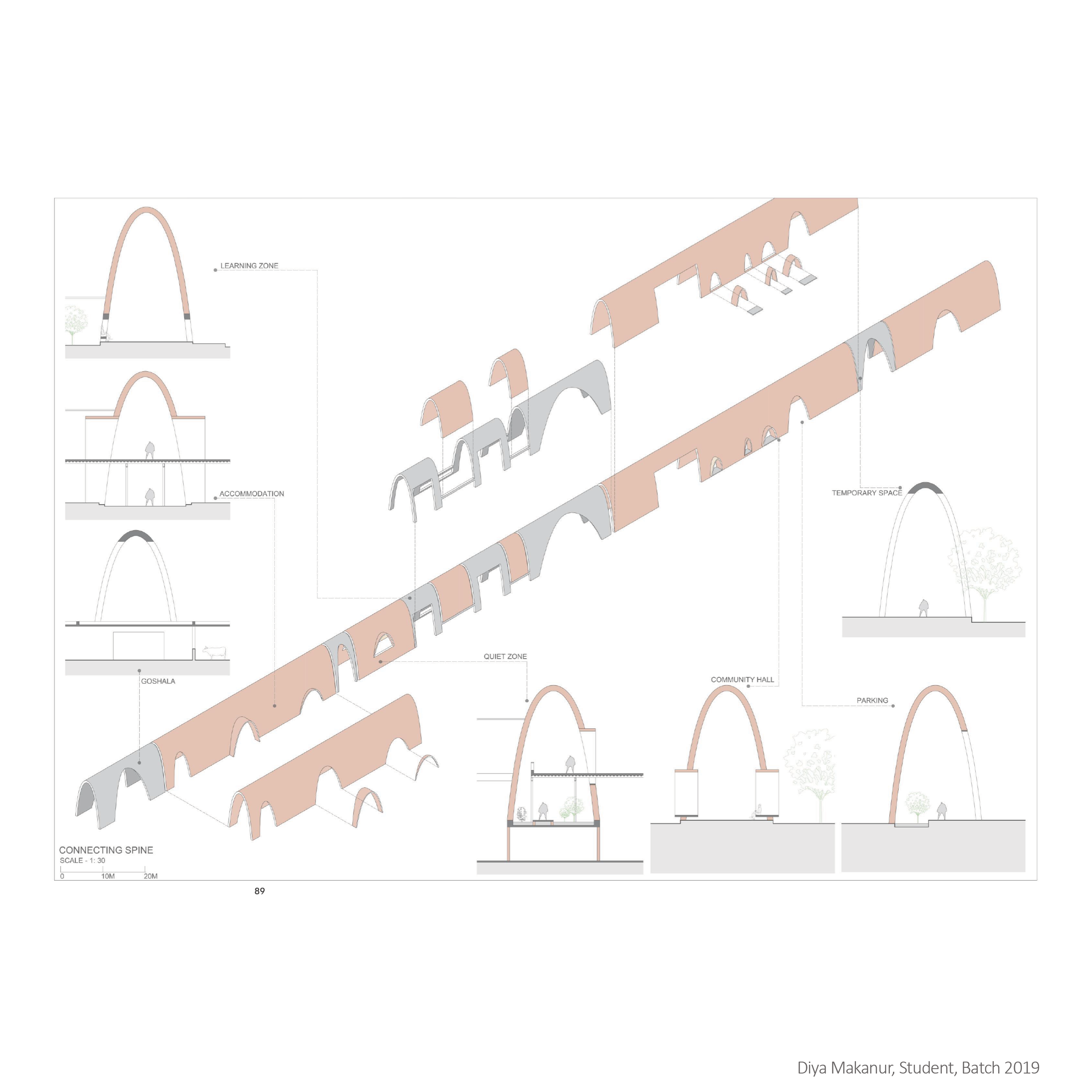
The isometric drawing reflects the project’s exploration of spatial moods and adaptability. It emphasizes how the vault responds to various programs, illustrating its role in shaping spaces like accommodations, goshala, and public areas. Openings are carefully detailed to suit privacy, ventilation, and connectivity, aligning with each space’s character.Part sections provide a focused view of these conditions, showing how the vault integrates seating, controls enclosure, and adapts to functional needs. This method allows the drawing to narrate the project’s core ideas, combining mood, spatial experience, and technical clarity in a cohesive visual language.
This drawing was made as part of the Thesis Studio Conducted in 2024.
Thesis Guide: Assoc Prof. Kiran Kumar
The drawing process for the isometric view involved exporting isometric views from SketchUp in CAD format, followed by refining them in AutoCAD using precise line weights and colors to enhance clarity, represent materials and emphasize key design elements.
The part sections were detailed out in AutoCad
Time Taken 3 hours
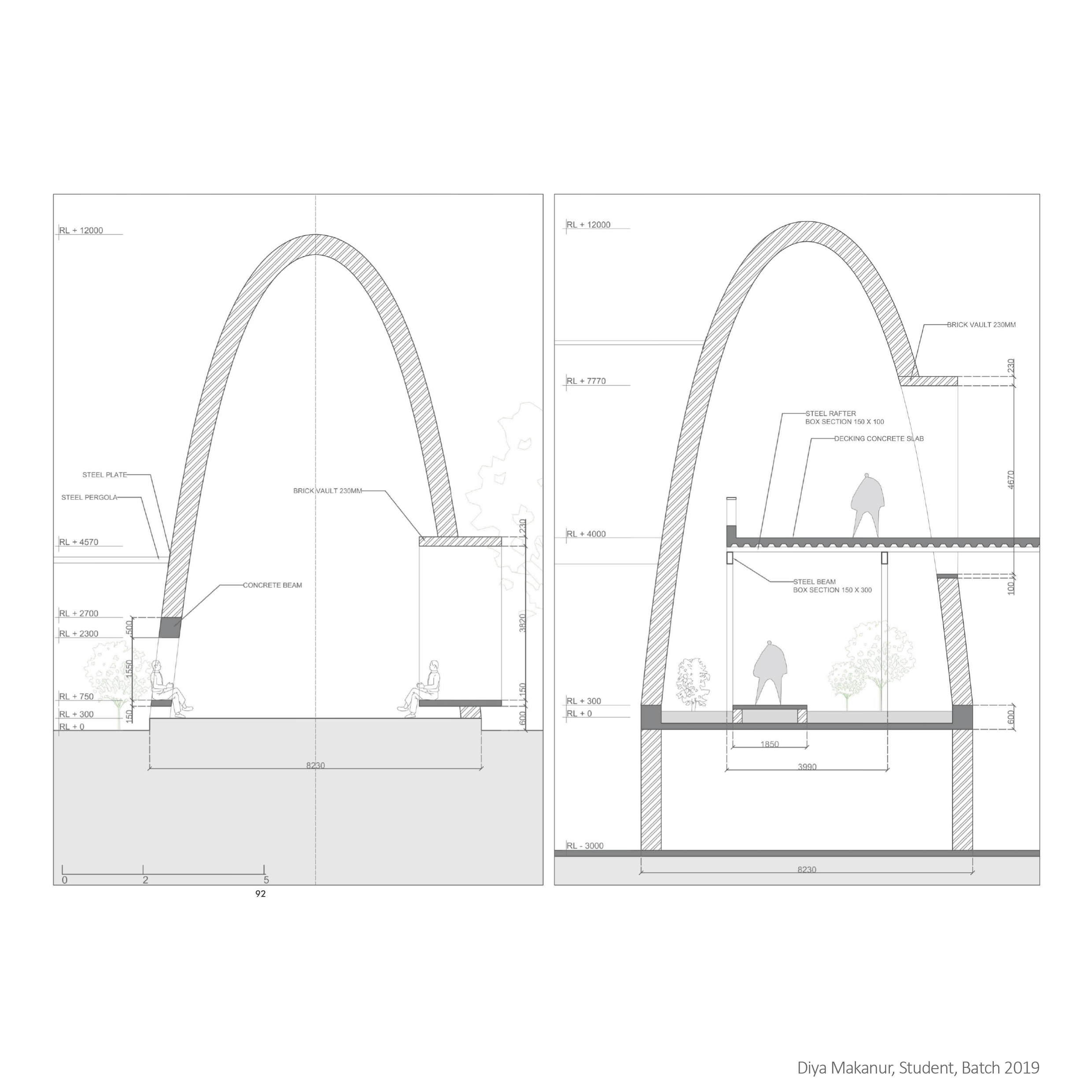
The detailed part sections explain the materiality, volume, and scale of the spaces, emphasizing technical aspects. The second section illustrates the spine’s interaction with adjacent areas and the integration of varying levels within the vault. It demonstrates how vegetation seamlessly becomes part of the spine, enhancing the spatial experience.
Assoc Prof. Kiran Kumar
The drawing was primarily created using AutoCAD, incorporating levels, materials, and dimensions to convey scale.
1 hour
 WCFA Graphic Collective