
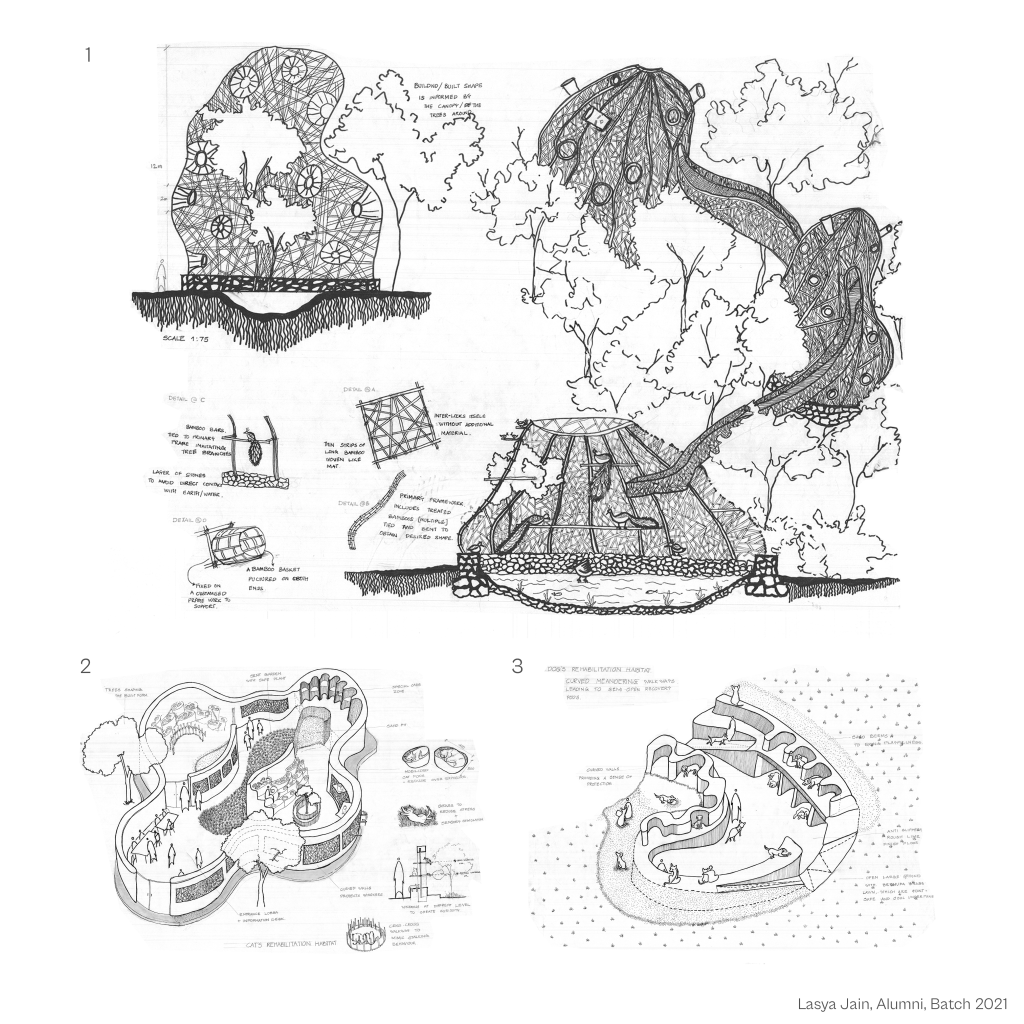
These drawings bring together my understanding of how each animal’s physiology, behaviour, and sensory needs influence its relationship with space. As the project embraces hands-on construction and the intimacy of handmade architecture, I wanted the drawings to carry the same spirit. Through their detail, texture, and hand-drawn quality, I hope to convey the thought, care, and sensitivity embedded in the design, allowing the viewer to experience not just the architecture, but also the empathy behind it.
1. The bird enclosure explores the relationship between avian physiology, natural rhythms, and spatial design. the enclosure uses porous materials and minimises human disturbance. The intention is to create a habitat that feels less like a confined enclosure and more like an extension of the birds’ natural environment, where architecture quietly supports their well-being.
2. The cat enclosure is designed around the natural instincts and sensory needs of cats. Custom-sized pods, Lemongrass patch,cross cross walkways and opening at different heights to keep their curiosity alive while enriching their everyday environment.
3. The dog enclosure is a small yet thoughtful intervention designed around canine behaviour and comfort. Curved, perforated protective walls surround an elevated platform with varying levels, while playful circulation encourages movement, exploration, and interaction. Together, these elements create a sense of visual security while allowing dogs to engage with their surroundings, supporting their physical and emotional well-being during rehabilitation.
Medium : All drawings were hand-rendered on A2 Gateway sheets using a black gel pen.
Time Taken : 3 days
Thesis Guide : Anne Feenstra

