
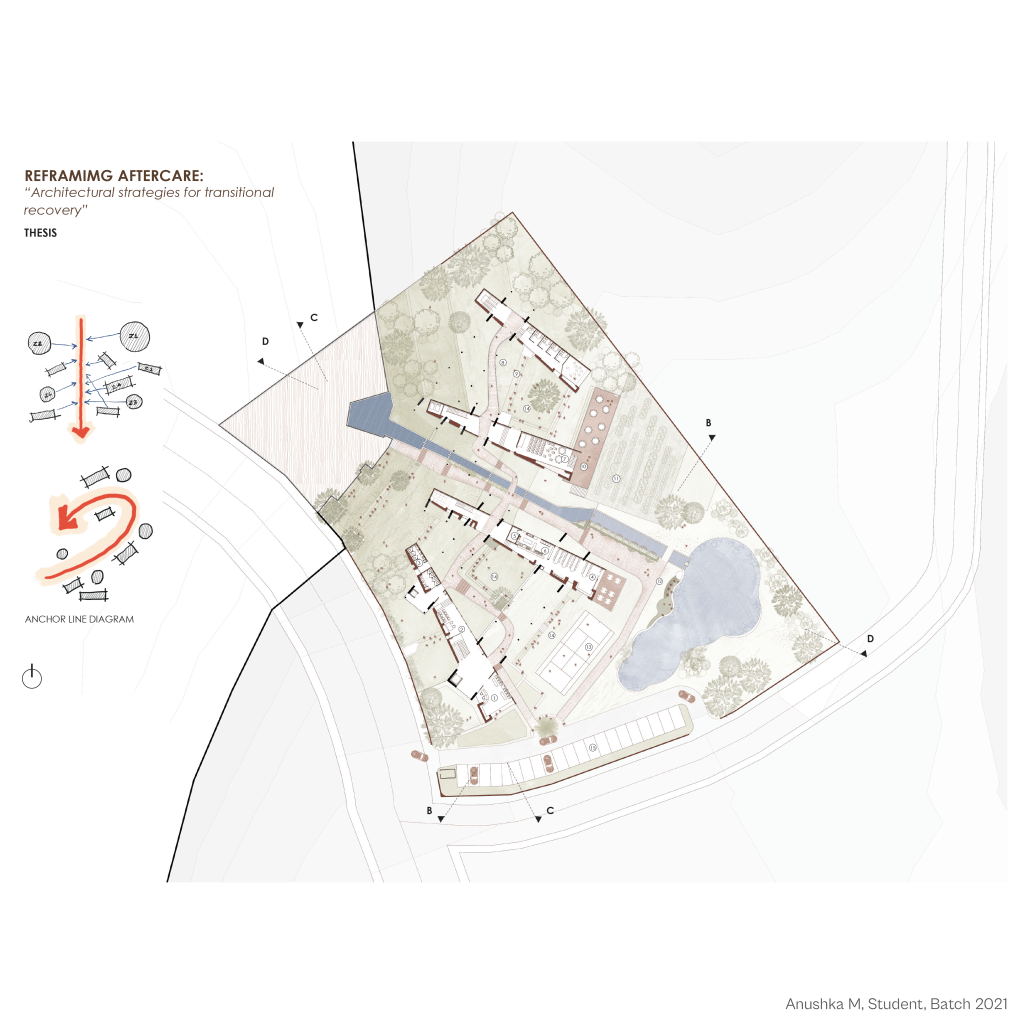
The project envisions architecture as a continuum – a landscape of gradual thresholds where movement, openness, and sensory experience reflect the psychological phases of recovery. The plan translates this idea through an “anchor line”: a continuous element that guides movement while allowing moments of pause, solitude, and interaction.
The water body acts as the anchor, creating a calm sensory datum through the site, while branching pathways traverse across it and extend towards the surrounding spaces. These pathways create a fluid network of movement, gradually shifting between private and communal spaces, reinforcing the idea of recovery as a journey towards balance and autonomy.
The design further embraces openness to nature, allowing the landscape to become an active part of the recovery process. Gardens, courtyards, water, and shaded outdoor spaces are woven into the built form, creating constant visual and physical connections with nature. This creates a softer, less institutional environment where light, vegetation, breeze, and changing views become part of the everyday experience, supporting moments of calm, reflection, and gradual reconnection.
Thesis Guide : Nelson Pais
 WCFA Graphic Collective